
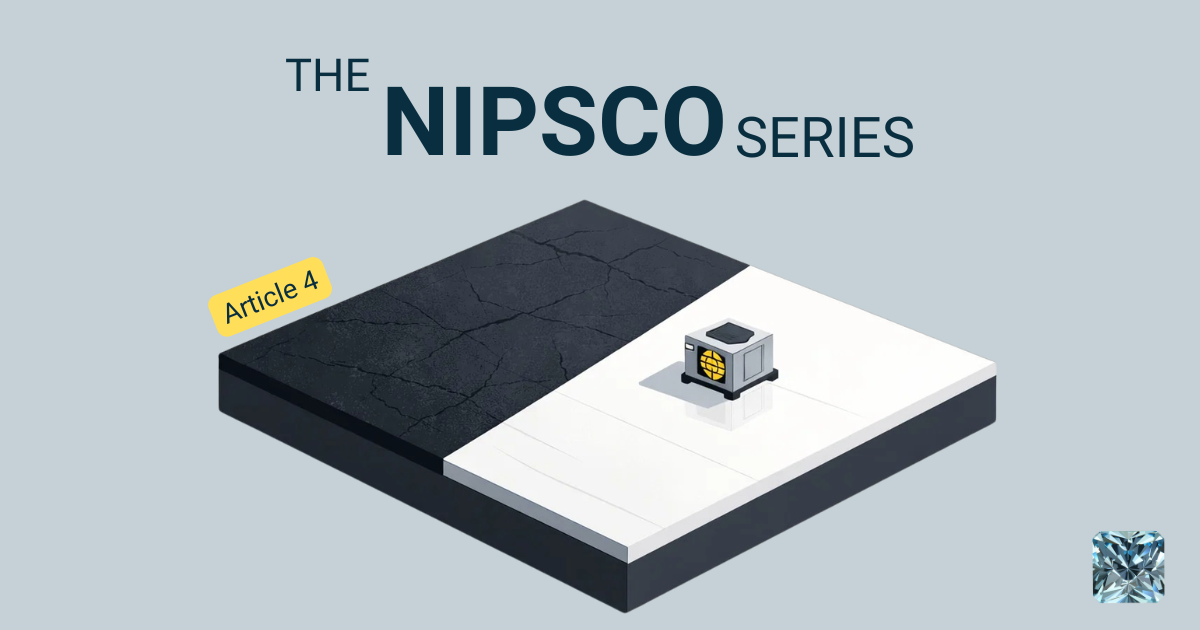
Dark Roof? That's 25% of Your NIPSCO Bill Right There.
How flipping your roof from black to white reflective gives you an instant return on your energy costs. The simplest, most overlooked upgrade for commercial buildings, and why NIPSCO will never tell you about it.

- Slash Cooling Costs. White roofs cut summer AC use up to 25%.
- Protect Roof & HVAC. Less heat stress means longer equipment life.
- Fast, Low-Disruption Install. Coating goes on over your existing roof in days.
- Proven ROI. NWI buildings see 8 to 20% annual energy savings, often under 4-year payback.
Go outside. Look up at your roof.
If it's dark, black tar strips, torch-down modified bitumen, aged rubber, the charcoal-gray of old built-up roofing that's been baking since the Clinton administration, you are running a solar collector on top of your business. You are paying to heat the sky. You are, in the most quantifiable sense possible, donating money to NIPSCO that the building is supposed to be keeping.
Edward knows this now. He didn't know about it eight months ago. He runs two operations in the Hammond-to-Portage corridor, a mid-sized warehousing facility and a retail distribution space, and for six years he did what every smart operator does: watched his overhead, ran his labor costs tight, negotiated hard with suppliers. He did everything right.
Meanwhile his rooftops, both dark, both aging, were quietly running his HVAC into the ground and depositing a portion of his energy spent directly into NIPSCO's revenue column every single month.
The fix wasn't a full roof replacement. It wasn't a major capital project. It was a coating.
Edward's second-quarter cooling costs dropped meaningfully. His rooftop units stopped cycling so hard. The roof got sealed, warranted, and extended by another two decades.
He's annoyed he waited six years. He told us to tell you.
Your Roof Is Not Neutral. It's Taking a Side.
Here's the physics, and it's not complicated.
A traditional dark commercial roof absorbs roughly 80 to 90% of the solar radiation that hits it on a Summer afternoon. That energy doesn't disappear. It converts to heat. The roof surface climbs to 150°F, 160°F, sometimes higher. On a 90-degree day in Hammond, your roof is cooking at temperatures that would make a decent oven.
That heat transfers into the building. Your HVAC responds. The compressors kick on. The rooftop units run longer cycles. The electricity meter spins. NIPSCO notices.

Now flip it.
A white reflective coating, the category Conklin's acrylic elastomeric systems have anchored since the 1970s, reflects more than 85% of those UV rays before they become heat. According to the Lawrence Berkeley National Laboratory Heat Island Group, a clean white roof that reflects 80% of sunlight stays about 50°F cooler than a grey roof reflecting only 20%. Some measurements put the surface temperature difference at 50 to 90°F on a hot summer afternoon.
That is not a minor difference. That is the difference between a roof that is neutral and a roof actively working against your HVAC every day from May through September.
The U.S. Department of Energy estimates that reflective elastomeric roof coatings can reduce a commercial building's annual air conditioning energy use by up to 25%.
Twenty-five percent of your cooling load. Gone. Not gradually. Immediately, from the first Summer after installation.
The NWI Honest Version of This Story
Here is where we're going to be straight with you, because Edward deserves honesty and so do you.
Northwest Indiana is not Phoenix. It's a place where lake-effect moisture rolls in from Fall through Spring and a building spends as many months trying to stay warm as cool.
White reflective roofing earns its money hardest in the cooling months. The science on cold-climate heating penalties is real, in deep winter, a dark roof absorbs marginal solar heat that a white roof doesn't. That's worth acknowledging. It's also worth noting that across virtually all US locations, summertime cooling savings offset any heating penalty, resulting in net annual energy savings, the conclusion from research covering 236 US cities.
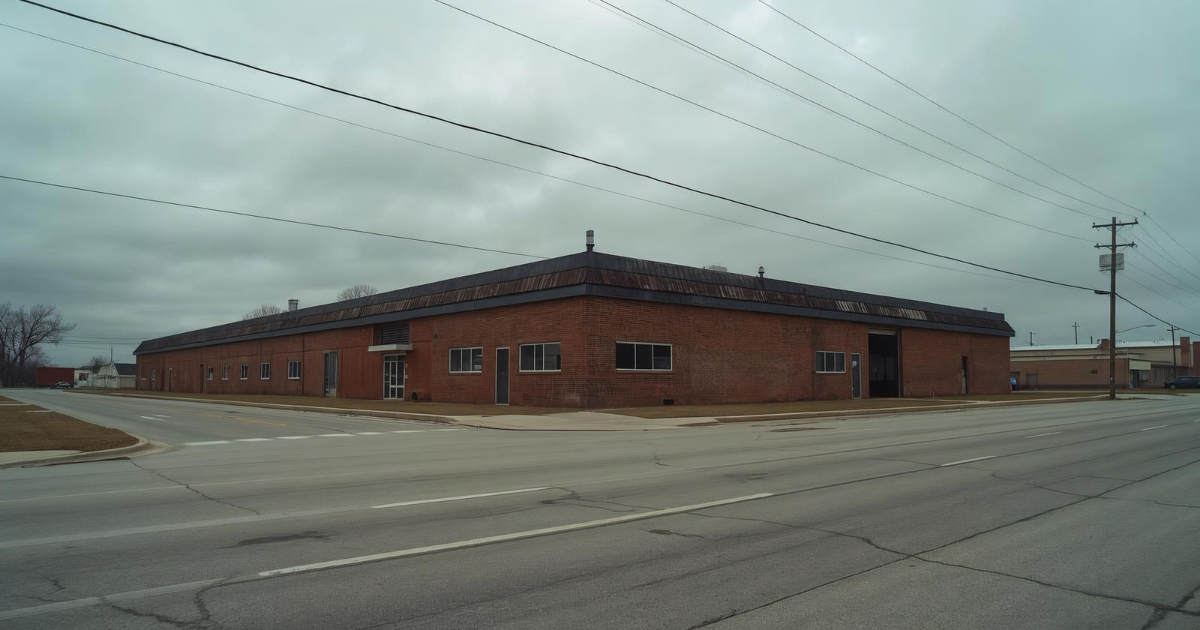
NWI's cooling season is long enough and solar gain significant enough that a properly installed white coating delivers real annual savings. The 25% figure is the cooling load reduction. Your total bill reduction depends on your cooling-to-heating ratio and current insulation performance. The honest range for total annual impact on a typical NWI commercial building: 8% to 20% off the full year bill, weighted toward the warmer months.
For a $4,000 per month NIPSCO account, that's $3,800 to $9,600 back per year. Annually. Every year the white roof is on that building.
That's the conservative version. Edward would tell you the real number looked better.
What the Dark Roof Is Doing to Your Equipment
Energy savings are the headline. Equipment is the subplot that costs more money and gets less attention.
Commercial rooftop HVAC units are rated for a certain number of operating hours and a certain thermal load. When the roof is running 50 to 90 degrees hotter than it should be, the HVAC compensates for a condition it was never designed to handle continuously.
This doesn't show up immediately. It shows up when the compressor fails at year seven instead of year twelve. It shows up in service call frequency. It shows up when the technician says the unit needs replacing and you figure it just wore out, without anyone connecting the failure to the thermal environment the roof has been creating since installation.

Cool roofs reduce peak cooling demand by 11 to 27% in air-conditioned buildings. That reduction isn't just a bill savings, it's a reduction in the stress cycles your rooftop units run through every hot afternoon in Summer. Less peak load means longer equipment life. Longer equipment life means the capital replacement budget stays in your pocket.
The HVAC replacement you're buying in four years? The white roof might push that to eight. Nobody puts that on an ROI spreadsheet. It belongs there.
The Coating Itself, What It Actually Is
This is not paint. This is not a cosmetic treatment. This is a liquid-applied roofing system.
Conklin's acrylic elastomeric coatings are multi-layer applications: a base coat or primer, reinforcing fabric embedded at critical seam and penetration points, and a top coat that cures to a durable, seamless, UV-reflective membrane. The system goes on over the existing roof, over modified bitumen, over built-up roofing, over aging metal, over tired single-ply. In most cases there's no tear-off. The business stays open. Installation is typically done in one to three days.
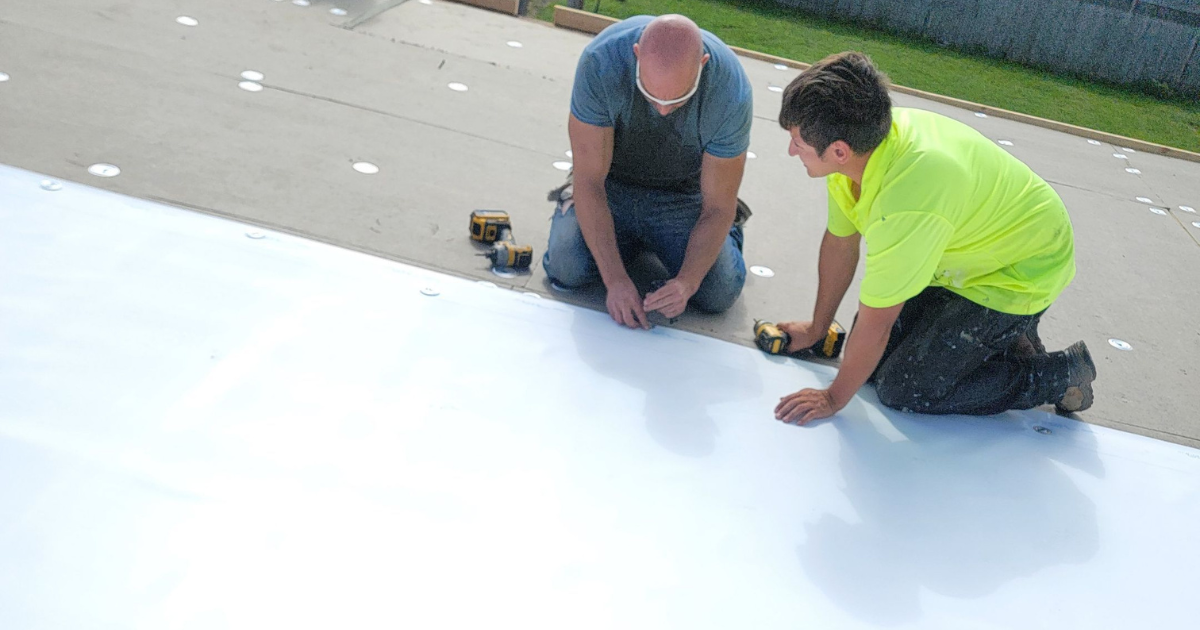
What you end up with is a seamless membrane, no exposed seams, no exposed fasteners, no gaps at the penetrations where every leak you've ever had has started. Warranted. Documented. Transferable to the next owner of the property.
The coating extends the useful life of the existing roof system significantly. Applied as part of a regular maintenance program, it can extend a roof's life by 10 years or more.
So the full math is, energy savings plus deferred equipment replacement plus extended roof life plus documented warranty. That's three line items, not one. Edward's spreadsheet had all three on it when he made the call.
✉️ Is your roof dark? You probably already know the answer. But if you want confirmation with actual dollar figures attached, send us the address. We'll pull the satellite image, assess the membrane type and visible condition, and tell you what it's likely costing you.
Subject Property Address: ___________________________
We'll pull the satellite image, run the numbers, and send you a one-page summary. No appointment required. No call. No pitch. Just the math.
[ Email address ] → [ Send Me the Real Stuff ]
The Silent Weight
There's one objection Edward had before he made the call. Same objection most operators have.
"Winter. We're in Indiana. Won't a white roof cost me in the heating season?"
Less than you think, and less than the summer savings recover.
The sun in NWI in January is low in the sky. It hits your roof at a shallow angle for fewer hours. The reflective benefit in the cooling season, high sun, long days, direct perpendicular radiation, is dramatically larger than any marginal heating penalty in the short, low-angle days of January. The annual net is positive. The research is not ambiguous.
The other thing worth noting, if your building has adequate insulation under the membrane, the R-value of that assembly is doing the winter work. The coating handles the summer solar load. The insulation handles the steady-state thermal barrier. They're not competing. They're a team.
Add insulation board when you do the coating and now you've addressed both levers at once. The energy savings compound. The HVAC runs easier in both seasons. The NIPSCO bill reflects both upgrades every month. Superior menu options exist.
Reflective Roofing and Energy Savings in NWI
Q: Does a white reflective roof actually reduce my NIPSCO bill?
A: Yes, with specificity. The primary savings are in cooling load reduction, documented at up to 25% of annual air conditioning energy use. In NWI's climate, the net annual impact on your total NIPSCO bill typically falls in the 8% to 20% range depending on your cooling-to-heating ratio, building use, and current insulation performance. For facilities with high cooling loads, restaurants, warehouses, retail, the return lands at the higher end.
Q: How hot does a dark commercial roof get in NWI summers?
A: On a 90°F summer afternoon, a dark commercial roof surface can reach 150°F to 165°F. A white reflective coating keeps the same surface within 10°F to 20°F of ambient air temperature, a difference of 50°F or more. That differential directly drives HVAC load and operating cost every day of the cooling season.
Q: What is the ROI on a reflective roof coating for a commercial building?
A: For a commercial building with 5,000 to 10,000 square feet of dark roof, a Conklin coating system typically runs $1.50 to $2.50 per square foot installed, depending on substrate condition. Annual energy savings of $4,000 to $10,000 are documented for buildings in that size range. Payback periods of 18 months to 4 years are typical, before accounting for extended roof life and deferred HVAC replacement.
Q: Can a reflective coating go over my existing dark roof without tear-off?
A: In most cases, yes. Conklin's liquid-applied acrylic systems adhere to modified bitumen, built-up roofing, metal, and aged single-ply substrates without full tear-off. The existing roof must be structurally sound with no active moisture intrusion, confirmed by a proper assessment before installation.
Q: How long does a reflective coating last?
A: Conklin acrylic systems are warranted up to 20 years depending on the system and substrate. Reflectivity reduces modestly with weathering and soiling, a maintenance wash sustains performance. A renewal coat within the warranty period extends the system further.
Q: Is Conklin's coating Energy Star qualified?
A: Yes. Conklin's acrylic elastomeric coatings are Energy Star approved, which makes them eligible for certain NIPSCO commercial energy efficiency program incentives and potential federal tax treatment depending on project scope.
One Last Thing
Edward did not do a tear-off. He did not close for two weeks. He did not finance a six-figure project.
He put a coating on two dark roofs. The crew was done in four days across both buildings. His cooling bills dropped. His HVAC stopped running like it was trying to beat the sun in an arm-wrestling match. He got a warranty he can hand to his bank.
Your roof is on right now. It's either working for you or against you. There's no neutral.

✉️ Dark roof? Send us a satellite image of your roof. We’ll tell you if it’s costing you money. (Spoiler: it is.)
Subject Property Address: ___________________________
Drop your subject property address. We'll pull the satellite image, identify the membrane type, estimate the energy load impact, and send you a one-page summary immediately.
[ Email address ] → [ Send Me the Real Stuff ]
Pristine Industrial Roofing — Serving commercial and industrial property owners across Lake County and Porter County.
Liquid-applied Conklin coating systems. FLEXION vinyl membranes. Proactive maintenance programs.
Valparaiso | Hammond | Portage | Merrillville | Hobart | Gary
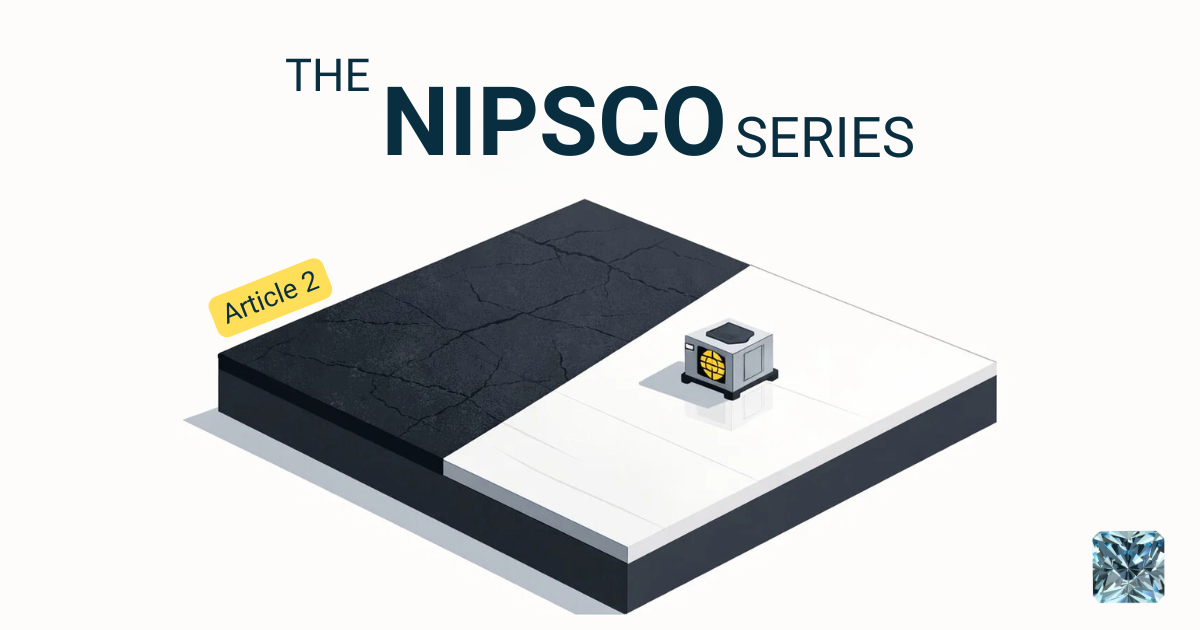
This is Article 3 of our NIPSCO series. Now we take a closer look at the details that matter.
Read Article 1 here, NIPSCO Just Cranked Your Bill, Again. Here's What They’re Hiding.
Article 2, Your Landlord's Been "Fixing the Roof" for a Decade. You're Still Paying NIPSCO.
Next in the series: NIPSCO and the Indiana Statehouse Had an Affair. You’re Paying for the Hotel Room.
Read other blog:
We Love Conversations
 SoHelpful@PristineIndustrialRoofing.com